Using Sodium Hydroxide (NaOH) in CIP – Balancing Cleaning Power, Safety & Stability
‘At a Glance Sodium hydroxide or NaOH is highly effective for removing organic residues in CIP bu...
Large-scale industrial facilities including pharmaceuticals, biopharmaceuticals, and allied industries, have a comprehensive range of industrial equipment and complex production systems working round-the-clock. Your manufacturing equipment needs to be perfectly clean and sanitised to keep the production processes running smoothly and efficiently at all times.
Hygiene and cleanliness are paramount in the biopharmaceutical industry, where having a sterile environment for the production of drugs and other biopharmaceutical products is non-negotiable. However, cleaning the manufacturing equipment is a time-consuming task that affects your team’s productivity and efficiency. ACleaning in Place (CIP) systemmakes the cleaning process more efficient and streamlined, without affecting your operations. CIP in manufacturing setups is the best solution for cleaning industrial equipment thoroughly without disassembling the components.
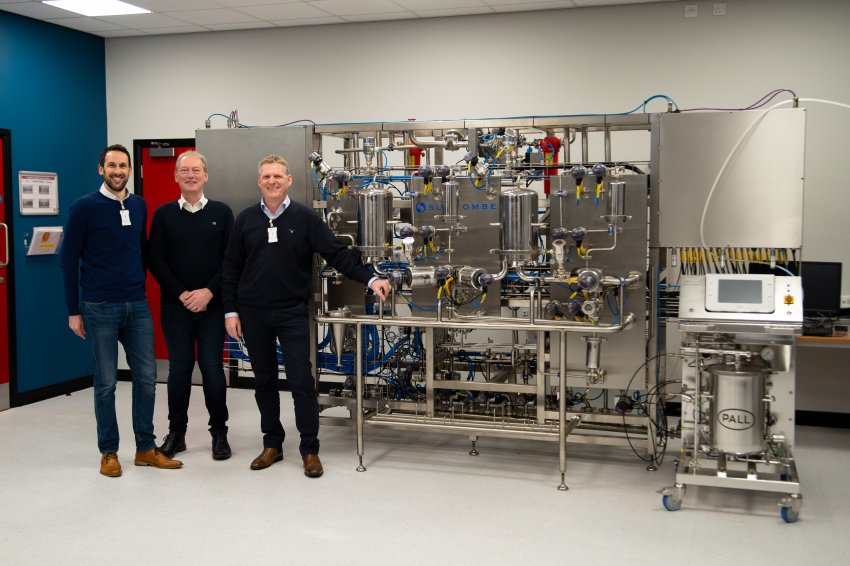
Suncombe is a leading name in supplying CIP systems, offeringadvanced CIP solutionsfor a range of industries worldwide. After proudly pioneering the CIP technology design in the 1950s, we’re now globally renowned for supplying Clean-in-Place systems in the biopharmaceutical industry, biotechnology, biowaste, food, and other sectors.
In this blog post, we’ll explore the processes, applications and importance of CIP in biopharma.
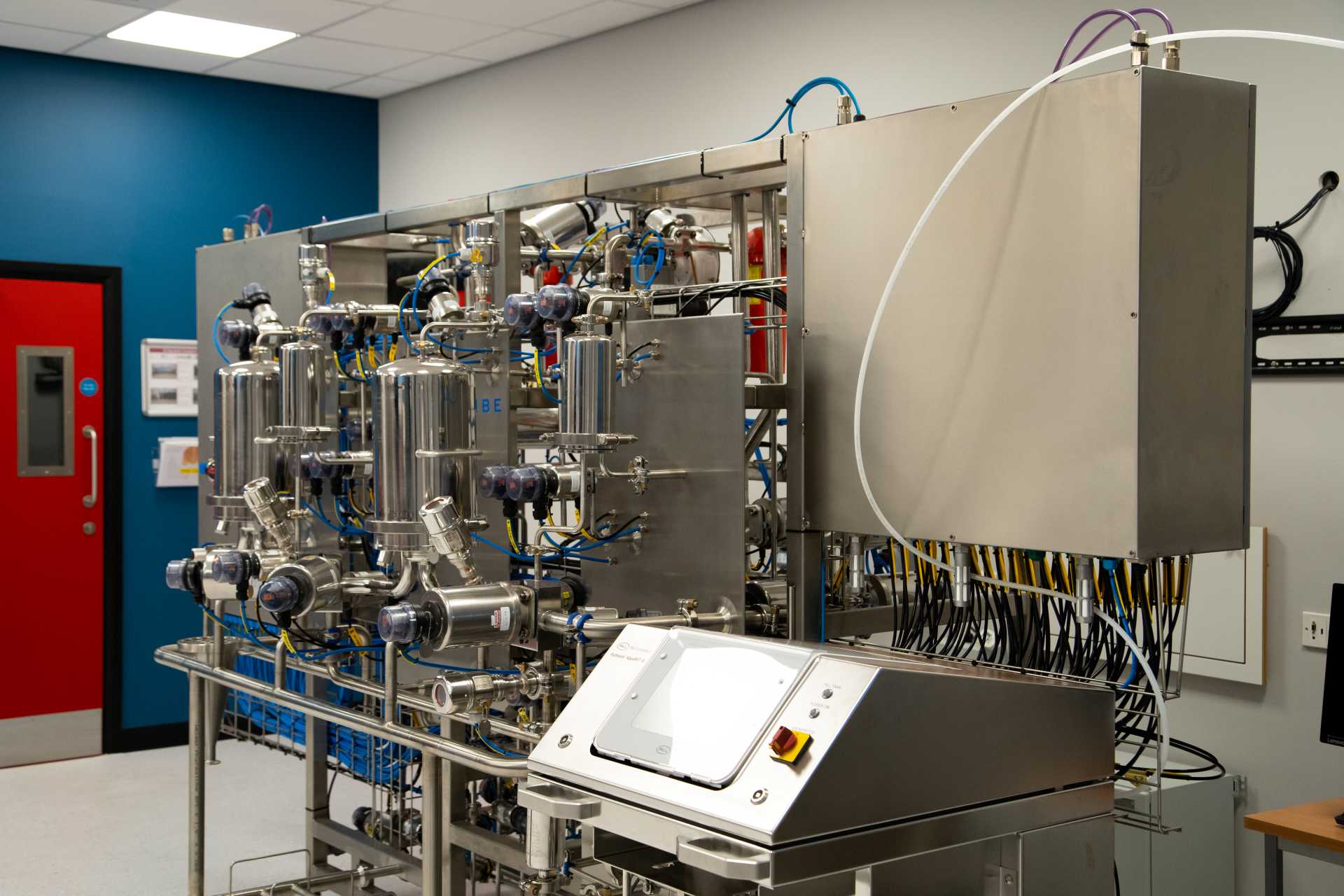
AClean-in-Place (CIP) systemsimplifies the challenging task of cleaning production and processing equipment. It uses a blend of water, chemicals, heat, and kinetic energy for a specific duration to sanitise machinery, vessels, pipework, small apertures, enclosed spaces, and other contaminated equipment. Modern CIP systems carry out the cleaning process without the need to disassemble the equipment or involve the direct operator.
The use of CIP in manufacturing sectors has become popular for its ability to sanitise equipment, removing physical dirt residues and microbiological contamination, including pathogens. Modern CIP systems follow a complex and critical process of circulating a cleaning solution through the production equipment using piping and pumps, while regulating and maintaining the pressure and flowrate through valves and control systems. This delicate yet complex interplay of monitoring the complete CIP process from start to finish, while adhering to industry-specific Clean-in-Place protocols is made possible through advanced CIP systems and with the experienced insight of the CIP operators at Suncombe.
CIP systems have a critical role to play in the biopharmaceutical industry. They’re used to clean important drug production equipment including reactors, mixers, and filling machines. Our monitored CIP systems support your biopharmaceutical production processes by keeping your operations free from cross-contamination.
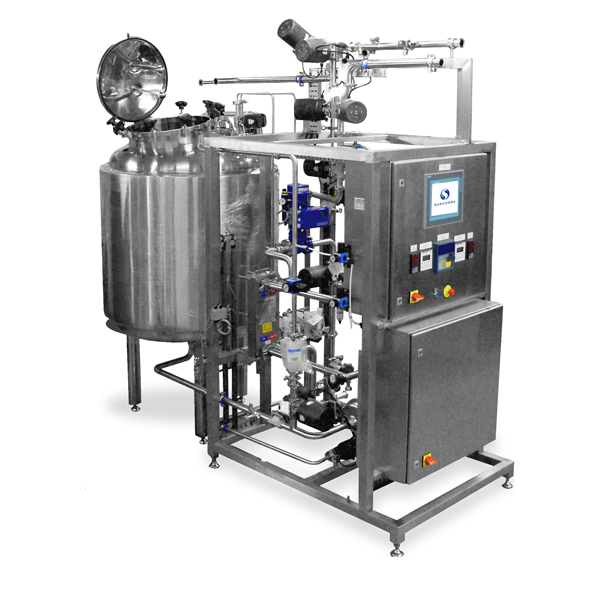
Suncombe offersa wide variety of solutions, includingStatic CIPandMobile CIPsystems.Contact usto speak to our cleaning-in-place specialist and learn more about our products and services.
A typical Clean-in-Place protocol involves pumping an assortment of cleaning solutions through the manufacturing equipment. Alkaline detergents, acid detergents, and sanitisers are the most common chemicals used.
Most Clean-in-Place protocols and processes employ the following similar set of operations:
Before the actual cleaning, this step helps remove loose debris and residues.
The detergent cleaning step starts with circulating the cleaning agents to remove attached dirt and soil particles.
In this stage, dirt and the detergent are rinsed out.
If required, an acid-cleaning operation can be used to remove scaling or alkaline residues.
This second rinse flushes out the acidic cleaning solution and any residual agents.
In this step, a chemical agent or heat is typically applied to disinfect and remove any leftover microorganisms or chemicals.
A final rinse is carried out to empty the equipment of any traces of chemicals.
The processes used in a CIP system vary according to the industry it’s being used in, as well as the machinery type and design. Water alone, along with temperature, pressure and agitation, is used in most Clean-in-Place protocols. High temperatures and kinetic energy can bring about better and more efficient CIP cleaning and sanitation in the CIP cycle.
For over six decades, Suncombe Ltd. has supplied CIP systems across the globe in multiple industries and sectors. All our CIP systems use Clean-in-Place protocols designed to meet the highest cleanliness standards. Browse our CIP system selection guidehere.
CIP in biopharma is absolutely essential, for the following key reasons:
Ensuring Product Safety and Quality
CIP in biopharma prevents even the smallest chance of cross-contamination from occurring between different batches of products. This system maintains the integrity, purity and potency of every drug by ensuring all residues and contaminants, including microbes, pathogens, and active pharmaceutical ingredients are safely emptied from the production equipment.
Complying with Regulatory Standards
TheFood and Drug Administration (FDA), Medicines and Healthcare products REgulatory Agency (MHRA and European Medicines Agency (EMA) sets the strictest sanitary standards for biopharmaceutical manufacturing units that only CIP systems can meet. CIP ensures pharmaceutical equipment is free from contaminants to ensure the production of formulations under controlled and consistent conditions. Suncombe’s CIP in biopharma systems target reactors, filling machines, tanks, vessels, IBCs, vats, fermenters, glovebox isolators, mixers processors, OEM equipment, and more.
Boosting Operational Efficiency
Using automated CIP systems can boost operational efficiency and help you avoid the need for time-consuming manual dismantling and cleaning processes. CIP ensures quicker turnaround times between production batches, which in turn boosts production capacity, without the risk of human error.
Maintaining Lifespan of Equipment
Clean-in-place systems in the biopharmaceutical industry can help in maintaining your production equipment for long periods. The CIP process ensures the complete removal of contaminants and chemicals and prevents corrosion and damage to production equipment, which in turn reduces maintenance costs and increases the equipment’s lifespan.
Supporting Good Manufacturing Practices
CIP in biopharma is essential to comply withGood Manufacturing Practices (GMP), which place emphasis on the non-negotiability of hygiene and sanitation in manufacturing processes.
Suncombe facilitates the CIP process for pharmaceutical companies and provides the necessary documentation to show compliance with GMP. We support your commitment to quality processes.
Minimising Environmental Impact
Today’s CIP systems are designed to handle cleaning solutions efficiently. Our advanced CIP systems can be modified into a ‘total loss’ CIP system, under which some part of the washing and cleaning media is recovered and recycled for part of the cycle. This generates lower volumes of waste, supporting sustainability and reducing environmental impact.
Sixty years since pioneering the CIP technology design, Suncombe LTD has supplied thousands of CIP systems far and wide across the UK and the globe. With an extensive portfolio of products andservices, we’ve come a long way as an award-winning leader in the industry with an established clientele.
Our business specialises in supplying hygienic and sterile mechanical, welding process engineering and automation systems. Suncombe’s comprehensive range of Static CIP and Mobile CIP systems ensures your production equipment is clean while minimising any downtime and labour costs.
We’re here to support your biopharmaceutical operations with our complete CIP solutions that meet complex regulatory, validation, and project management requirements.
Send an email [email protected] your CIP process requirements, or call+44 (0) 203 089 0280to speak to one of our specialists.
Explore more posts