The Importance of Clean-in-Place Systems to the BioPharmaceutical Industry
Large-scale industrial facilities including pharmaceuticals, biopharmaceuticals, and al...
The Pirbright Institute is a world-renowned research facility focused on the control and prevention of viral diseases in livestock.
The Brooksby Building is a major new high-biological containment science facility completed by The Pirbright Institute. This 4,745 square-metre building, named in honour of John Brooksby CBE – a pioneer in Foot-and-mouth disease virus (FMDV) research and former director of the Institute – is dedicated to the scientific study of livestock diseases.
The Pirbright Institute selected Kier for the design and construction of this high-containment facility, recognising the significant challenges it presented due to the stringent demands of integrating advanced design and build techniques. With a proven history of successfully delivering highly technical projects, Kier was deemed the ideal partner to contribute to this development, which plays a vital role in the UK’s national science infrastructure.
Built to rigorous international safety standards, the building will enable scientists to additionally study viruses that infect humans, including Rift Valley fever virus and Japanese encephalitis virus.
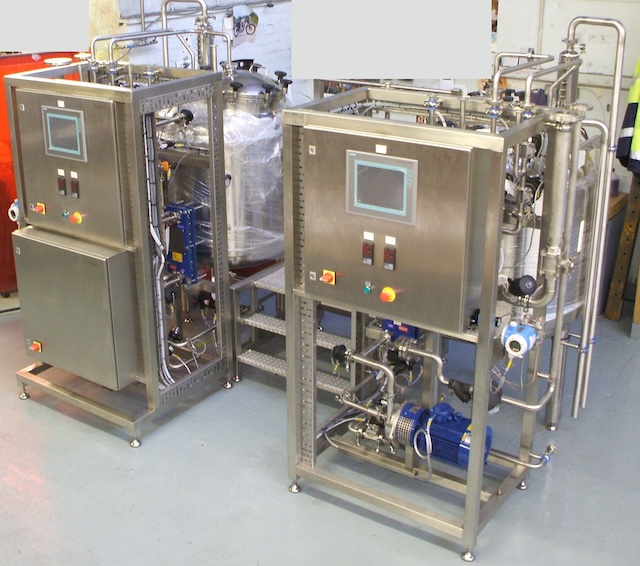
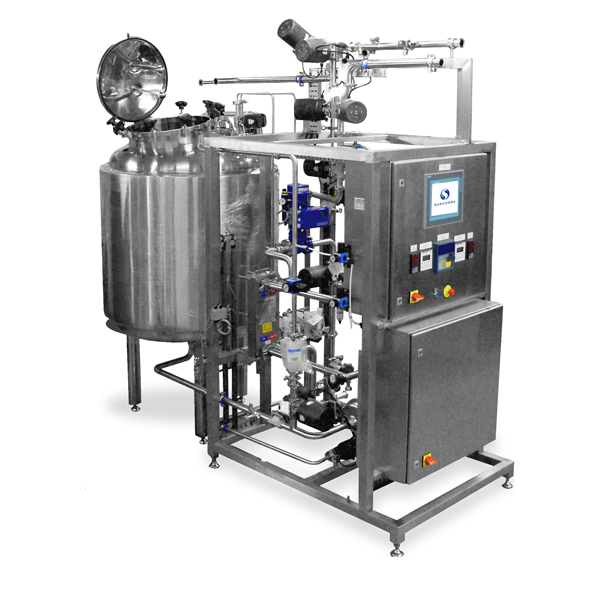
To ensure the facility met stringent biosecurity requirements while optimising operational efficiency, The Pirbright Institute required the implementation of a new effluent decontamination system (EDS). This system is crucial for maintaining the highest standards of biosafety and environmental responsibility. Suncombe, a global leader in the design and manufacture of advanced effluent decontamination systems, was selected to deliver a bespoke solution. Known for its extensive expertise and innovative approach, Suncombe’s contributions align seamlessly with the Institute’s vision of achieving excellence in biosafety and containment.
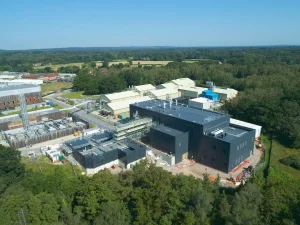 Figure 1- Brooksby Building courtesy of The Pirbright Institute
The Pirbright Institute is a world leading centre of excellence in research and surveillance of virus diseases of farm animals and viruses that spread from animals to humans. Working to enhance capability to contain, control and eliminate these economically and medically important diseases, the Institute’s highly innovative fundamental and applied bioscience contributes to global food security and health, while also improving quality of life for animals and people.
Kier Construction is a leading provider of construction, infrastructure services, and property development. The company is known for its focus on sustainability and delivering works that benefit communities. Kier’s Major Projects division specialises in complex technical ventures within the science sector, with particular expertise in high-containment facilities. For the Brooksby Building project, Kier assembled an exceptional project team that collaborated seamlessly with Suncombe and The Pirbright Institute, ensuring the successful delivery of this critical high-containment research facility.
Suncombe was heavily involved in the initial design and implementation of the Effluent Decontamination System on the Brooksby Building. The building is intended as a self-contained, stand-alone, large animal experimental facility designated to accommodate ‘in vivo’ studies involving ‘high containment’ pathogens of livestock, such as foot-and-mouth disease virus (FMDV) as well as pathogens that can spread from livestock to humans. The facility also has sufficient flexibility to house small animals for ‘in vivo’ studies. The building’s engineering features ensure the highest international standards are achieved and that a world leading environment for both staff and animals is delivered.
The Brooksby Building is named after John Brooksby CBE, a remarkable researcher who joined the then FMD research institute at Pirbright in 1939; spent years developing diagnostics methods and vaccines for FMD and swine vesicular disease and helped build the Institute’s international reputation. 2018 marked the 60-year anniversary since laboratories at Pirbright were designated the World Reference Laboratory for foot-and-mouth disease virus. The Brooksby Building is a new site and is crucial to the successful delivery of the Institute’s science and forms a key component of the overall development of the Pirbright campus.
The Challenge was to design and implement an Effluent Decontamination System that operated at the Brooksby building. The building is a self-contained, stand-alone, large animal experimental facility designated to accommodate ‘in vivo’ studies involving “high consequence” pathogens up to, and including, SAPO4 (including Foot and Mouth Disease Virus) and ACDP Hazard Group 3 (viruses that can cause serious disease in humans). The Effluent Decontamination System needed to be seamlessly integrated into the high-containment facility while adhering to stringent local and international regulations.
We started by reviewing the initial building specifications and worked with the client to develop models of the proposed ETP. These models included the P&ID, the 3D CAD model and a quality plan.
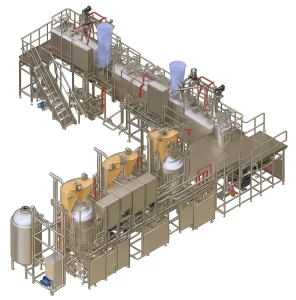 Figure 2- System Assembly
Following preliminary design, we held and attended design evaluation meetings, HAZOPs and risk assessment, to jointly develop the optimum methodology for guaranteed effluent treatment at the containment level 4.
We identified and specified all the performance testing required to provide test results and demonstrations and developed the planning of the testing and commissioning of the final system early in the project programme.
We identified all the critical outcomes and the requirements of the statutory authorities and using this knowledge, we developed the designs. We worked in close co-operation with the client and long term Suncombe engineers who have been working on biowaste effluent treatment and critical decontamination and sterilisation system throughout our company’s 60+ years of operation.
Throughout the detailed design and construction process we worked closely with a contractor in the process of installation and upfront design to ensure that the system would successfully integrate into the building structure.
The installation process proved a large task due to the size of the system and the critical nature that comes with development of level 4 containment systems. The installation and testing process included a Factory Acceptance Testing, carried out to pre-approved testing protocols. System documentation and certifications were also reviewed, and a full testing process occurred including simulated load tests and automation.
These extensive pre-delivery tests were carried out to ensure that on delivery to site the system was pre-tested ensuring that reconnection and preparedness for operation was straightforward. Following delivery and installation, the testing regime continued with the next stage of commissioned Site Acceptance Testing, once again against pre-approved protocols. Tests were carried out to prove that the installed system maintained the operation of the Factory Accepted system and continued on to challenge testing and bio-deactivation testing.
Enhanced Biosafety: The treatment process ensures complete inactivation of pathogens, safeguarding both personnel and the environment.
Automation: The fully automated system ensures repeatability, reliability and robust cycles providing a 100% guarantee of successful operation.
Regulatory Compliance: The system’s automated data capture and reporting capabilities facilitate compliance with biosafety and environmental regulations.
Sustainability: Energy-efficient heating systems and a robust process contribute to sustainable operations, reducing the environmental impact of effluent treatment.
Energy Savings: The incorporation of energy-efficient components and energy recovery systems results in lower operating costs and reduced carbon footprint.
Future-Proofing: The modular and scalable design allows for future upgrades and capacity expansion as research needs evolve.
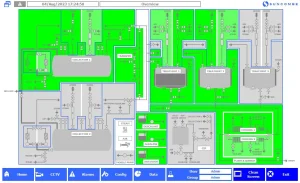 Figure 3- Automation Overview
The launch of Suncombe’s Effluent Decontamination System at the Brooksby Building of The Pirbright Institute represents a target in the delivery of advanced biosafety infrastructure. By integrating validated decontamination processes, automated control, and robust system redundancy, the solution ensures full compliance with stringent biosafety regulations while supporting the institute’s high-containment research mission.
This successful deployment not only reinforces Suncombe’s reputation as a trusted provider of high-performance decontamination technologies but also exemplifies the company’s commitment to enabling scientific advancement through safe, sustainable, and future-proof engineering. The project demonstrates how tailored technical expertise, and collaborative delivery can meet the most demanding requirements of global bioscience and research organisations.
Steve Overton (Suncombe Operations Director) commented, “The Brooksby Building project exemplifies Suncombe’s ability to deliver cutting-edge solutions for some of the most challenging and high-stakes environments in the world.
This facility required not only an advanced effluent decontamination system but also a partner who could collaborate seamlessly with multiple stakeholders, adhere to the highest safety standards, and integrate innovative technologies into a highly regulated environment.
I’m proud of the way our team rose to this challenge, delivering a system that not only meets but exceeds the rigorous requirements of a high-containment research facility.
Our approach to this project was grounded in Suncombe’s 60+ years of expertise in biosafety and decontamination technologies. From the initial design phase, through to testing, commissioning, and final installation, every step was executed with precision, ensuring operational efficiency, reliability, and compliance with international standards.
The collaborative effort with The Pirbright Institute and Kier Construction allowed us to tailor our solution to the unique needs of the Brooksby Building, enabling critical research into livestock and zoonotic diseases. This is more than just a technical achievement; it’s a contribution to global biosafety, food security, and public health.
I am proud to mention the seamless integration and collaborative partnership with Kier, the construction team, throughout the project.
I’d like to thank the entire Suncombe team, our partners, and stakeholders for their dedication and professionalism throughout this project. The Brooksby Building stands as a testament to what can be achieved when innovation and collaboration come together in the pursuit of a common goal”.
Explore more posts
Large-scale industrial facilities including pharmaceuticals, biopharmaceuticals, and al...

Our New Suncombe Facility Earlier this month we were pleased to announce the opening of our n...